Springer-Nature旗下《Advanced Composites andHybrid Materials》期刊2019年第2期論文正式出版
https://link.springer.com/journal/42114/2/2
敬請各位專家學者多投稿,審稿,多瀏覽,下載和引用本期刊論文,也敬請您多提寶貴意見,以便我們后期進一步優化和改進本期刊質量,感謝您的大力支持!

2D bio-nanostructures fabricated by supramolecular self-assembly of protein, peptide, or peptoid
Weihong Zhang, Peng Yang*
Advanced Composites and Hybrid Materials, 2019, 2: 201-213
DOI: 10.1007/s42114-018-0066-x
Abstract
Biomolecular self-assembly isa promising strategy for fabricating two-dimensional (2D) nanostructures such assheets, films, lattices, or membranes. In this paper, we summarize the recent developmentof 2D bio-nanostructures that are formed by supramolecular self-assembly of protein,peptide, or peptoid, respectively. Specific focus is given on the formation mechanismsand the structures as well as functionality of the 2D bio-nanostructures. Besides, some typical applications of 2D bio-nanostructures have been listed. At last, the potential research direction of 2D bio-nanostructures is discussed.

Preparation, development, outcomes, and application versatility of carbon fiber-basedpolymer composites: a review
Tushar Kanti Das, Prosenjit Ghosh, NarayanCh. Das*
Advanced Composites and Hybrid Materials, 2019, 2: 214-233
DOI: 10.1007/s42114-018-0072-z
Abstract
The high strength to weight ratio of carbon fiber hasmade it as an attractive energy-saving material over the conventional strength-bearingmaterials like steel. Realizing the trend, the high-weight steel is being progressively replaced by the low-weight and corrosion-resistant carbon fiber composites in manystrength applications. The carbon fiber-reinforced polymer matrix composite (PMC) have thereby become forefront material in aerospace, automobile, sporting goods, and other applications which demand high strength and high modulus. Moreover, thegradual reduction of its cost curtsy to the extensive research in the field of carbonfiber technology in recent years has been opened its market in different construction applications. This review is the discussion of carbon fiber loaded a variety ofpolymer matrix composites where the structural importance of these composites hasbeen emphasized. The objective of this discussion is to provide information on thewhole spectrum of carbon fiber-based polymeric composites. It also includes brief discussion about preparation and properties of carbon fibers along with processing, fabrication, and structural applications of these carbon fiber-based polymer composites.

High performance and low floating fiber glass fiber-reinforced polypropylenecomposites realized by a facile coating method
Peiqi Xu, Minjie Qu*, Yang Ning, Ting Jia, Yongjie Zhang, Shuwei Wang, Na Feng, Lihao Wu
Advanced Composites and Hybrid Materials, 2019, 2: 234-241
DOI: 10.1007/s42114-019-00080-0
Abstract
In this work, we reported akind of low floating fiber, high-performance composites which were prepared by meansof mixing polypropylene and polybutylene-1/glass fiber masterbatch. The polybutylene-1/glassfiber masterbatch prepared by coating method made the surface of glass fiber coveredby a thin resin, and the as-prepared composites displayed significantly higher shearthinning, higher interface bonding strength, and lower crystallization temperature. The results of scanning electron microscope and atomic force microscope showed thatthe coating process could effectively hinder the exposure of glass fiber. And, the composites at the PB-1 content of 10 wt% showed higher flexural strength (142.0MPa) and tensile strength (69.6 MPa) than those for PP (41.3 MPa and 31.4 MPa, respectively). Moreover, the behavior of possible stacking arrangements inside the composites wasinferred in this study.

AuNRs/mesoporous silica/hydroxyapatite nanovehicles with thermally responsive polymeric cap for remotely controlled drug delivery
He Ma, Jun Shi*, Xiaoyi Zhu, Zheng Zhang, Jingguo Li, Shaokui Cao*
Advanced Composites and Hybrid Materials, 2019, 2: 242-253
DOI: 10.1007/s42114-019-00082-y
Abstract
In this study, Au nanorods (AuNRs)/mesoporoussilica (SiO2)/hydroxyapatite (HAP) nanovehicles with thermally responsive polymeric cap for remotely controlled drug delivery were prepared. The degradabilityof the hybrid nanovehicles could be greatly enhanced by introducing pH-responsiveHAP into mesoporous SiO2 shell, which would result in the corrosion ofHAP from the hybrid matrix in acid media. Thermal-/pH-sensitive poly(N-isopropylacrylamide-co-acrylicacid) (PNA, P(NIPAM-co-AAc)) was employed as the smart polymeric cap to controlthe drug delivery of hybrid nanoparticles. The in vitro drug delivery results showed that the hybrid nanoparticles displayed excellent drug loading efficiency and distinctnear-infrared (NIR)–, thermal-, and pH-responsive drug delivery properties. Theresults of cell viability also demonstrated that the prepared P(NIPAM-co-AAc)-cappedAuNRs/SiO2/HAP nanoparticles exhibited the outstanding biocompatibility. The present study provides a facile way to prepare multi-responsive nanovehicles with excellent biocompatibility and degradability by combining intelligent polymerwith hybrid inorganic skeleton, which is greatly promising for remotely controllable drug release.

Superhydrophobic/superoleophilic cotton fabrics treated with hybrid coatingsfor oil/water separation
Guoqing Li, Zhonghua Mai, Xin Shu, Dongzhi Chen*, Min Liu, Weilin Xu
Advanced Composites and Hybrid Materials, 2019, 2: 254-265
DOI: 10.1007/s42114-019-00092-w
Abstract
A series of novel superhydrophobic/superoleophilic cotton fabrics with the use of hybrid coatings combined with polyvinylsilsesquioxanes(PVS) polymer and nano-Al2O3 particles were developed successfullyby solution immersion. The influences of the concentration of nano-Al2O3 on surface morphology, composition, water-repellent properties, and durability ofthe treated cotton fabrics were investigated in detail, respectively. Subsequently, oil/water separation performance and self-cleaning ability of the treated cottonfabrics were examined. It is interesting to find that the novel cotton fabrics treatedwith the hybrid coatings of PVS polymer and nano-Al2O3 exhibited enhanced mechanical properties, excellent water-repellent properties, and durable mechanical stability with the increasing concentration of the nano-Al2O3 particles, compared with cotton fabric treated by the sole PVS without adding nano-Al2O3 particles. Meanwhile, the treated cotton fabrics exhibited high oil/water separation efficiency of 99% and excellent self-cleaning ability when the concentration of nano-Al2O3 particles in composite coatings increases to 2%. The hybrid coatings combined with the PVS polymer and Al2O3 particles are promising in exploitation of superhydrophobic/superoleophilic materials, which can be applied to many fields including oil/water separation, wallpaper and softtiles, and clothing for oil recovery, water-proof and self-cleaning applications, respectively.

Analytical and experimental investigation on magnetorheological behavior ofCoFe2O4-rGO-incorporated epoxy fluid composites
Nitai Chandra Adak, Suman Chhetri, NareshChandra Murmu, Pranab Samanta*, Tapas Kuila*
Advanced Composites and Hybrid Materials, 2019, 2: 266-278
DOI: 10.1007/s42114-019-00086-8
Abstract
CoFe2O4-reducedgraphene oxide (CoFe2O4-rGO) composites were synthesized byone-pot solvothermal technique. Different amount of well-dispersed nanosized cubicalgrains of CoFe2O4-rGO were incorporated into the epoxy resinfor the preparation of fluid composite samples. The magnetorheological propertiesof the prepared samples showed significant enhancement in yield strength as wellas viscoelastic properties. The flow curves of the samples showed non-Newtonianbehavior at lower strain rate (γ''''<10 s?1) under high magnetic field strength, thereafter with increasing the value of γ'''', the flow curves shifted Newtonian regime. The composite samples also possessed a yield stress (τy)under a magnetic field at adequately high strain rates and followed Bingham relation τ=τy+γ''''η0, where, τ is shear stress perpendicular to the applied magnetic field and η0 is the plastic viscosity. The experimentally obtained values of τy for different values ofB0 and φ correspond well to the values predicted theoretically by Rosensweig.

Facile synthesis of nanostructured polyaniline in ionic liquids for high solubilityand enhanced electrochemical properties
Shihua Li, Chunying Yang, Shatila Sarwar, Amit Nautiyal, Pengfei Zhang, Haishun Du, Na Liu, Jialin Yin, Kuilin Deng*, Xinyu Zhang*
Advanced Composites and Hybrid Materials, 2019, 2: 279-288
DOI: 10.1007/s42114-019-00103-w
Abstract
As one of the most investigated conducting polymers, polyaniline (PANI) is considered to be of practical use inmany applications. In this study, two new ionic liquids, 1-methylimidazolium hydrogensulfate ([Hmim]HSO4) and 1-methyl-3-n-butylimidazopersulfate ([C4mim]2S2O8), which were synthesized from 1-methylimidazole ([Hmim]), were used as solvent anddopant, oxidizer, respectively, for in situ polymerization of aniline. Because ofthe application of the unique structure of ionic liquid, we obtained the ionic liquid–dopedpolyaniline (IL-PANI) with high solubility (25 mg mL?1 in dimethyl sulfoxide(DMSO)). And by adjusting the ratio of [C4mim]2S2O8to aniline monomer, the preferred PANI nanofibers could be controlled to form athree-dimensional porous structure. It was found that the ion/electron transportchannels could be formed inside the 3D structure. Thus, the redox reactions couldoccur both at the surface and inside the PANI electrode. Electrochemical characterization showed that the fabricated PANI electrode exhibited a specific capacitance of 489F g?1 at a current density of 0.5 A g?1. Also, the capacity retention rate reached up to 81% after 4000 cycles investigated at 2 A g?1.In addition, a high-energy density of 80.2 Wh kg?1 was measured when[Hmim]HSO4 was used as an electrolyte. Thus, the present work suggesteda new strategy for fabricating high-performance PANI electrode for supercapacitor applications.

Tuning the crystal morphology and catalytic behavior of graphene-templated energeticbis-tetrazole copper coordination polymers
Xue-Xue Zhang, Wei He, Shu-Wen Chen, Jie-Yao Lyu, Zhaoqi Guo*, Michael Gozin*, Qi-Long Yan*
Advanced Composites and Hybrid Materials, 2019, 2: 289-300
DOI: 10.1007/s42114-019-00085-9
Abstract
The addition of graphene-basedenergetic catalysts to the solid propellants may improve the combustion efficiency, and meantime maintain its energy level and high thermal stability, which are ofgreat importance for the solid propellant applications. Various new energetic coordinationpolymers (ECPs), based on the graphene oxide (GO) copper(II) complex, have beensynthesized using 5, 5′-bis-tetrazole (H2BT) or 5, 5-bis-tetrazole-1, 1-dioldehydrate(DHBT) as the ligands, by hydrothermal and solvothermal methods. It has been shownthat crystal structure and morphologies could be changed by regulation of the synthetic methods, resulting in a series of the graphene-based bis-tetrazole complexes using the same starting materials. The graphene-based energetic azole-based ECPs showed higher thermostability than the pristine metal complexes due to stabilization effect of graphene, and change in crystal forms also makes thermostability different. The heat releases from AP have been increased by three to four times under the catalytic effects of these GO-based ECPs, where two exothermic peaks of AP merged into oneat 290.5 °C for GO-Cu-DBT/AP and 316.2 °C for GO-Cu-BT/AP. A shoulder peak is shownafter the main exothermic peak of RDX due to the post-effect of the catalysts onits condensed products with secondary reactions.

Valorization of cement kiln dust in activation and production of hybrid geopolymercomposites with durable characteristics
H. M. Khater*
Advanced Composites and Hybrid Materials, 2019, 2: 301-311
DOI: 10.1007/s42114-019-00097-5
Abstract
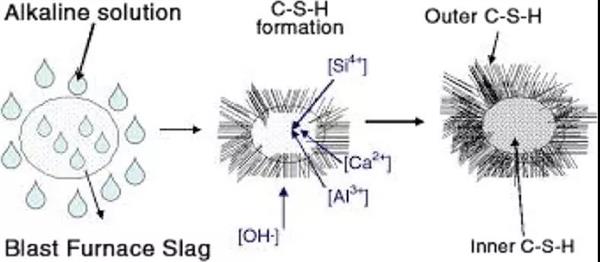
The main target of the present paper is valorize the high alkalis in cement kiln dust for production of sustainable hybrid alkali activated composites, where these high alkalis content prohabit its recycle in building materials. The used precursorsare electric arc slag (EAFS) and granulated blast furnace slag (GGBFS) as well ascement kiln dust (CKD) was studied. Activation was carried upon usage of 25% CKD, as it bears high alkali content that can initiate and propagate the polymerizationprocess. The formed geopolymer composites were immersed in 5% MgSO4 solutionto determine the stability upon sulfate attack. FTIR, XRD, SEM, compressive strength, and water absorption analysis were utilized to examine the obtained geopolymer under sulfate attack. Results clarified the potentiality of cement kiln dust in production of alkali activated composites with durable properties in sulfate solution and possessan optimization of strength values by EAFS up to 50%, followed by lowering in strength with EAFS increase, although possessing stability up to 12 months. Data elucidateda good stability and resistance of mix containing slag substitution by 50% EAFSand 25% GGBFS and resulted in further enhancement in both mechanical and microstructural characteristics by increasing matrix compaction and cohesion than the non-immersedsamples (28 days).
Tailoring strength and modulus by 3D printing different continuous fibers andfilled structures into composites
Hui Mei*, Zeeshan Ali, Ihtisham Ali, Laifei Cheng,
Advanced Composites and Hybrid Materials, 2019, 2: 312-319
DOI: 10.1007/s42114-019-00087-7
Abstract
Three-dimensional (3D) printing is one of potential technologiesfor production of designable complex filled structures and mechanical strengthening along the reinforcing fibers for composites. The objective of this paper is to studythe tensile mechanical behavior of diverse concentric fiber rings and fiber layersusing glass fiber (GF), Kevlar fiber (KF), and carbon fiber (CF) printed into polymer composites and then to compare them. Additionally, it also aims to identify theinfluence of complex filled structures of Nylon on different fiber printed polymercomposites. Tensile tests and scanning electron microscope (SEM) were utilized tocharacterize the 3D printed composites. Results revealed that CF-printed composite exhibits the greatest tensile strength of 110 MPa and modulus of 3941 MPa as compared to glass and Kevlar fiber composites. Increase of concentric fiber rings and fiberlayers is attributed to increase in tensile strength and modulus. Also, the rectangular filled structure of Nylon declared the highest tensile strength and modulus than hexagonal and triangular filled structure owing to its rectangular filling that bears maximum load in longitudinal direction.

Photo-polymerized trifunctional acrylate resin/magnesium hydroxide fluids/cottonfabric composites with enhancing mechanical and moisture barrier properties
Yi Qin, Qiao Yu, Xianze Yin*, Yingshan Zhou, Jin Xu, Luoxin Wang, Hua Wang, Zhenming Chen
Advanced Composites and Hybrid Materials, 2019, 2: 320-329
DOI: 10.1007/s42114-019-00088-6
Abstract
In this paper, a facile and environmentally friendly approachwas used to prepare acrylate resin-based cotton fabric composites via adding reactive Mg(OH)2 fluids (MHFs) into trimethylolpropane triacrylate (TPT) monomerfollowed by coating on the cotton fabrics by photo-polymerization. The morphology, thermal stability, rheological behavior, and mechanical properties of polymer compositesare systematically characterized by various technologies. Mechanical test resultsde monstrates that tensile strength and young’s modulus of the polymer compositesare as high as 46 MPa and 1440.27 MPa, respectively, which is 3.5 and 9.1 timesthat of polymer composite in the absent of MHFs meanwhile without sacrificing the toughness. Moreover, it is amazingly found that the addition of MHFs can effectively reduce water vapor transmission rate of composite. Herein, these advantages of MHFscan be easily applied as encapsulation layer in the field of smart cotton fabricand electrical device.

Ordered 2D layered MoS2/conjugated polymer nanocomposites: influencesof sulfonated β-cyclodextrin on the preparation and properties
Jin Wang*, Zongchao Wu, Ruihong Xie, Yuanyuan Zhu, Xueting Liu
Advanced Composites and Hybrid Materials, 2019, 2: 330-338
DOI: 10.1007/s42114-019-00090-y
Abstract
Nanocomposites of MoS2 and conjugated polymers are excellent candidates for optical limiters, solid electrodes, electrolytes, and other purposes. The ordered layered structures of nanocomposites are essential. A strategy to prepare the regular two-dimensional (2D) layered MoS2/conjugated polymer nanocomposites was developed based on the β-cyclodextrin (β-CD) template. The complete intercalation nanocomposites of molybdenum disulfide (MoS2) with poly(3,4-ethylenedioxythiophene) (PEDOT), poly(3-methylthiophene) (P3MT), and polypyrrole (PPy) were prepared successfully. MoS2 is in the form of a monolayer or no more than trilayer with conjugated polymers inserted into the interlayers. In comparison with that of β-CD, sulfonated β-CD (β-CDSO3) has better water-soluble and act as dopants to improve the electrical and electro chemical performances of these nanocomposites simultaneously. The conductivities of nanocomposites based on β-CDSO3 template increase by one to three orders of magnitude, and their capacitance performances are superior. As an innovative route to preparethe regular 2D layered MoS2/polymer nanocomposites, the methodology is expected to be applicable to a wide range of layered materials and hydrophobic monomers.

Adhesiveless honeycomb sandwich structures of prepreg carbon fiber compositesfor primary structural applications
Md. Nizam Uddin, Helene T. N. Gandy, Muhammad M. Rahman, Ramazan Asmatulu*
Advanced Composites and Hybrid Materials, 2019, 2: 339-350
DOI: 10.1007/s42114-019-00096-6
Abstract
This study presents a comparative study of adhesiveless honeycomb sandwich structures of carbon fiber prepreg composites while assessing the structure with an adhesivefilm at the skin-to-core interface. Laminate and honeycomb sandwich panels werefabricated and tested with consistent layup, curing, and testing processes. Adhesives and wich panels were produced using the CYCOM 977-2 prepreg system, while adhesivelesssandwich panels were constructed with the MTM45-1 prepreg system. Laminate panelswere also fabricated using the two different prepregs. Specimens from the panelswere tested for physical and mechanical properties as well as moisture-absorptionperformance. Test results obtained from non-destructive testing and experimentalwork confirmed that physical properties of the self-adhesive prepreg mainly metthe component and void-content recommend ations for use in primary structures. Mechanicaltests were performed at room (24 °C), hot (82 °C), and cold (?55°C) temperatures, as well as under dry (low moisture) and wet (85±2%humidity) conditions. In all environments tested, the adhesiveless sandwich panelwith MTM45-1 exhibited a 14–16%higher tensile strength than the sandwich panel with 977-2 prepreg and AF191 adhesivefilm, testifying to the stronger bond at the skin-to-core interface. The short-beamshear strengths of the dry laminates above 58 MPa were also suitable indicatorsof polymeric composite materials for primary structural purposes in aircraft. The average short-beam shear strength of the 977-2 laminate was 28% higher than thatof the MTM45-1 laminate, hence displaying a tougher and stronger epoxy resin. These experiments suggest that an aramid honeycomb sandwich structure with a self-adhesivecarbon prepreg system compared to a similar structure using additional adhesive demonstrates the ability of these configurations for use as primary structures inaircraft. This study also confirms using adhesiveless composite panels for different industrial applications (e.g., wind turbine, automotive, ship, defense, and space).

Studies on ionic liquid incorporated polymer blend electrolytes for energy storageapplications
S. Jayanthi*
Advanced Composites and Hybrid Materials, 2019, 2: 351-360
DOI: 10.1007/s42114-019-00102-x
Abstract
Solidpolymer blend electrolytes (SPBEs) were prepared using poly(ethylene oxide) (PEO), poly(vinylidene fluoride-hexafluoro propylene) (P(VdF-HFP)) as polymer hosts, zinctriflate (ZnTr) as an electrolyte, and 1-butyl-3-methylimidazolium hexafluorophosphate(1B3MIHFP) as an ionic liquid (IL) via a conventional solvent casting technique. Various techniques like AC impedance spectroscopy, X-ray diffraction (XRD) analysis, scanning electron microscopy (SEM), and thermo gravimetric/differential thermal analysis(TG/DTA) respectively were carried out for the prepared samples. From AC impedancespectroscopic studies, maximum ionic conductivity of 95.72×10?4S cm?1 was observed for the system with 20 wt% of 1B3MIHFP at room temperature. Further, the temperature-dependent ionic conductivity study seems to obey Arrhenius behavior. Complexation and increase in degree of amorphicity for IL incorporated system was confirmed through XRD analysis. Ionic transference number was calculatedby Wagner’s polarization technique, and it was found to be 0.991 for the sample which possessed maximum ionic conductivity. This value suggested that the charge transport in the polymer blend electrolyte matrix is mainly due to the Zn2+ ions. The dielectric properties of the SBPEs were also studied using the complex dielectric permittivity spectra, complex electric modulus spectra, and loss tangentanalysis. Significant morphological changes were observed from SEM micrographs. From the TG-DTA analysis, thermal stability of the sample was found to be 245 °C.

Fabrication of Si@AP/NC metastable intermixed nanocomposites (MICs) by electrospraymethod and their thermal reactivity
Beilin Zuo, Jialing Zhang, Shuwen Chen, QiujinLiang, Xiaoping Qiao, Fengqi Zhao*, Pei-Jin Liu*, Qi-Long Yan*
Advanced Composites and Hybrid Materials, 2019, 2: 361-372
DOI: 10.1007/s42114-019-00098-4
Abstract
In order to enhance the heat release of nanoparticles silicon, the Si@AP/NC metastable intermixed composites (MICs) Si@AP/NC with varied contentof silicon (40%, 60%, and 80%) were designed and prepared by electrospray. Observation by scanning electron microscopy (SEM) has shown that the morphological characterizationof those composites was homogeneously mixed. The thermal properties of those MICswere evaluated by means of DSC-TG techniques. Results show that the low- and high-temperature decomposition of AP transitioned from two separated stages to a one-step process.This was mainly caused by the interaction of thin silica on the surface of siliconand perchloric acid. The dependence of activation energy on the conversation ratewas obtained by making use of state-of-the-art kinetic procedures. It has been foundthat decomposition of Si@NC/AP-40 and Si@NC/AP-60 followed the random chain scissionmodel. With the strengthening of active centers of silica, the mechanism of protonmigration of AP turned into the growth of the nucleus. The decomposition processof AP started on the surface of the crystal and gradually decomposed steadily asAP decomposition proceeded. Therefore, it is a first-order reaction model for Si@NC/AP-60and Si@NC/AP-80 in their second-step reaction. Overall, manufacture spherical Si-NPs composites wrapped in polymer though electrostatic spray technology, a novel way of preparing nanoenergetic materials was created. These nanocomposites could beapplied normally as fuels in thermobaric explosives or solid propellants.

Crystal structure, optical and electronic properties studies on an hybrid multifunctionalMnCl4-based material
Said Kassou, Abdesselam Belaaraj*, Philippe Guionneau, Riad Shaltaf
Advanced Composites and Hybrid Materials, 2019, 2: 373-380
DOI: 10.1007/s42114-019-00093-9
Abstract
In this research, the multifunctional organic-inorganic hybrid PEA-MnCl4 [PEA = (C6H5–C2H4–NH3)2] was subjected to single-crystal X-ray diffraction, X-ray diffraction powder, UV-visiblespectroscopy, scanning electron microscopy (SEM), and density functional theory, using projector augmented wave (PAW), based on U-Hubbard Hamiltonian (DFT+U) investigations. At 293(2) K, PEA-MnCl4 crystallizes in Orthorhombic system, Pbca spacegroup (a =7.202(5) ?, b =7.293(5) ?, c =39.386(5) ?, and Z =8). The optical study reveals that the compound undergoes an indirect optical transition with phonon-assisted Mn2+ d-d transitions in the visible region withan energy gap of about 2.14 eV, due to the internal transition of metal (orbitald). The implementation of the Hubbard U term in the calculation using (GGA+U) approximation allows more comprehension on the material behavior and shows that it keeps the antiferromagnetic state. The energy gap calculated (2.07 eV) is in good agreement with the experimental value. The electronic densities of states were computed and analyzed.
