Springer-Nature旗下《Advanced Composites and Hybrid Materials》期刊第4期論文正式出版
https://link.springer.com/journal/42114/1/4/page/1
敬請各位專家學者多投稿,審稿,多瀏覽,下載和引用本期刊論文,也敬請您多提寶貴意見,以便我們后期進一步優化和改進本期刊質量,感謝您的大力支持!

A review on dielectric properties of biofiber-based composites
H. B. Bhuvaneswari, Narendra Reddy*
Advanced Composites and Hybrid Materials, 2018, 1: 635-648
DOI: 10.1007/s42114-018-0053-2
Abstract: The ever increasing consumption and subsequent disposal of electronic goods is a major concern to the environment since most electronic goods contain non-biodegradable components. Regulations on disposal of e-goods and increasing environmental awareness on their use and disposal will necessitate finding alternative materials for electronic goods in the near future. One approach of making electronic goods more environmentally friendly is by developing biodegradable electronic components using natural cellulose and protein fibers. In fact, several studies have been done on using natural fiber-based materials for various electronic components. The presence of various functional groups that are amicable to modifications and the ability to be easily fabricated into various shapes and sizes are some of the advantages of using natural fibers for electronic and electrical applications. However, natural fibers and fibrous materials have considerably high variations in their properties which makes it difficult to precisely control the properties of the products developed. Also, the type of electronic components and the fabrication and testing conditions also vary significantly between reports which makes it difficult to make a comparison between studies Dielectric materials are one of the most common and critical components in electronic goods. A comprehensive report on the type of natural fibers used in the development of dielectric materials and their electrical properties would be useful to select the appropriate fibers and conditions for specific applications. In this review, we provide an overview of the various types of natural fibers used to develop composites for dielectric applications. Dielectric constants of fibers and composites made from the fibers with and without chemical modifications and at various frequencies and fiber contents have been discussed.

Nanostructured hydrophobic polyampholytes: self-assembly, stimuli-sensitivity, and application
Sarkyt Kudaibergenov*, Joachim Koetz, Nurxat Nuraje*
Advanced Composites and Hybrid Materials, 2018, 1: 649-684
DOI: 10.1007/s42114-018-0059-9
Abstract: This review is devoted to recent applications and fundamental aspects of hydrophobic polyampholytes—unique macromolecules containing acid, base, and hydrophobic groups that simulate the behavior of proteins, amphoteric polypeptides, or poly(nucleotides) in solutions. Attention was primarily focused on hydrophobically modified polyampholytes (HMPA), sometimes called hydrophobic polyampholytes or amphoteric “polysoaps.” The dependence of structural, morphological, hydrodynamic, and conformational properties of HMPA on external stimuli such as pH medium, temperature, ionic strength, water-organic solvents is outlined. This work demonstrates the self-assembly of HMPA into micelles, reverse micelles, vesicles, lamellar aggregates, dendrimers, fractal structures, clusters, and other highly organized matters. The self-organization of HMPA at air-liquid, liquid-liquid, and solid-liquid interphase is a key problem for designing Langmuir-Blodgett (LB), layer-by-layer (LbL) films and surface modifications. The preparation and characterization of metal nanoparticles stabilized by HMPA along with applications of HMPA-protected metal nanoparticles in catalysis are summarized. Recent research and applications include HMPA as an enhanced oil recovery (EOR) agent, pour point depressant (PPD), and wax inhibitor. Biomedical and agricultural applications of HMPA, including cryopreservation of living cells by hydrophobic polyampholytes in the clinical practice of reproductive medicine, are outlined. Thus, the systematic analysis of literature data regarding the characterization and application of HMPA inspires other researchers to take new directions and viewpoints on this exclusive and exciting subject.

Progress in research and development on matrix modification of continuous fiber-reinforced silicon carbide matrix composites
Xiaomeng Fan*, Xiaowei Yin
Advanced Composites and Hybrid Materials, 2018, 1: 685-695
DOI: 10.1007/s42114-018-0062-1
Abstract: Continuous fiber-reinforced SiC matrix composites, as the most common ceramic matrix composites (CMCs), have been extensively studied in the last two decades due to low density, high strength at high temperatures, good corrosion resistance, and thermal shock resistance. Matrix modification is an effective way to obtain high-performance CMCs by the combination of tailored fiber, interphase, and matrix. This paper summarized the progress on SiC-based CMCs containing modified matrix, and the advantages brought by the hybrid matrices were revealed. For different application fields, different second phases were introduced into SiC matrix, such as B-containing phases to improve the oxidation resistance, ultra-high-temperature ceramics to improve the ablation resistance, and high electrical conductivity phases to improve the electromagnetic interference shielding properties and the phases with low complex permittivity to adjust the dielectric properties to improve the electromagnetic absorbing performance. With the formation of hybrid matrices by introducing second phases, it can essentially improve the environment performance and extend the application fields of SiC-based CMCs.

Micro/mesoporous conjugated fluorinated iron-porphyrin polymer: porosity and heterogeneous catalyst for oxidation
Anwang Dong, Dongxu Wang, Tingting Dai, Qi Chen*, Lijuan Feng*, Ning Wang*
Advanced Composites and Hybrid Materials, 2018, 1: 696-704
DOI: 10.1007/s42114-018-0063-0
Abstract: A conjugated micro/mesoporous polymer based on fluorinated iron-porphyrin, FCMP-1, has been prepared via Sonogashira-Hagihara coupling polymerization. The BET-specific surface area of FCMP-1 is about 440 m2 g?1, and its pore sizes are mainly distributed in 0.81 nm and the range of 2.9–3.4 nm, which show that FCMP-1 is the micro/mesoporous polyporphyrin. The polymer shows moderate uptake for methane (4.23 wt%, 273 K) and toluene (615 mg g?1, 298 K). It was also studied as the heterogeneous oxidation catalyst for the oxidative transformation of substituted toluene to corresponding benzoic acid as well as Baeyer–Villiger oxidation using dioxygen as an oxidant. The yields of substituted benzoic acid are ranged from 77 to 88% by employing FCMP-1 as catalyst. Particularly, the yields of the reactions for producing ε-caprolactone (more than 99% selectivity) are ranged from 85 to 98%. The channels derived from the porous structure of Fe-porphyrin network are advantageous for the reactive molecules to contact with the catalytic sites and accelerate the diffusion of reactant and product. When compared with the polymer analogue without fluorinated substituents, FCMP-1 with fluorinated phenyl substituents demonstrates the better catalytic performance and cyclic utilization. The fluorinated phenyl moieties linked to Fe-porphyrins facilitate the transformation, due to their stabilizing effect on porphyrin to restrain the breakdown of the catalyst.

A treatise on multiscale glass fiber epoxy matrix composites containing graphene nanoplatelets
Usama Zaheer*, Aqeel A. Khurram, Tayyab Subhani
Advanced Composites and Hybrid Materials, 2018, 1: 705-721
DOI: 10.1007/s42114-018-0057-y
Abstract: Multiscale composites of epoxy matrix containing glass fibers and graphene nanoplatelets were prepared to investigate the effect of incorporating nanoplatelets upon the microstructural evolution and mechanical properties of the composites. Ozone-functionalized nanoplatelets were uniformly mixed in epoxy before incorporating glass fabric in the composites and processed through vacuum molding. Three different loadings of nanoplatelets were used, i.e., 0.1, 0.3, and 0.5 wt%, while the fraction of glass fibers was kept constant at ~ 60 wt%. The dispersion of nanoplatelets was witnessed using scanning electron microscopy, while mechanical characterization was performed using tensile, compression, flexural, and shear tests. Homogeneous dispersion of nanoplatelets increased mechanical properties of the composites, i.e., tensile, compression, flexural, and shear strengths up to 75, 30, 23, and 36%, respectively; similar trend in moduli values was observed, i.e., 116, 126, and 38%, respectively. The increased bonding between glass fibers and epoxy matrix due to nanoplatelets was found to be the possible reason of the increase in mechanical performance of multiscale composites along with the generation of a nanocomposite of GNP-reinforced epoxy to act as the matrix.

Thermal and mechanical performance of electrospun chitosan/poly(vinyl alcohol) nanofibers with graphene oxide
Shuai Yang, Yongxu Liu, Zaixing Jiang*, Jiyou Gu, Dawei Zhang*
Advanced Composites and Hybrid Materials, 2018, 1: 722-730
DOI: 10.1007/s42114-018-0060-3
Abstract: In this paper, electrospun chitosan (CS)/poly(vinyl alcohol) (PVA)/graphene oxide (GO) nanofibers were fabricated. Prepared nanofibers have been characterized and investigated for their morphological, structural, and thermal stability, and mechanical and hydrophilic properties. The uniform and defect-free nanofibers were obtained and GO, shaping spindle and spherical, was partially embedded into nanofibers, as shown in SEM. The hydrogen bonds between CS molecules and PVA molecules were easily formed due to the great compatibility of CS and PVA. The addition of GO interrupted the hydrogen bonds between CS molecules and PVA molecules, and the new interaction was formed among CS, PVA, and GO. Thermogravimetric analysis indicated that as the increasing of content of GO, the thermal stability of nanofibers decreased. More interestingly, the static mechanical properties tests and dynamic mechanical analysis all showed that the modulus of nanofibrous mats increased firstly and decreased subsequently with the increasing of content of GO, which could be concerned with the looser arrangement of nanofibers. The water contact angle of nanofibrous mats increased with the increasing of content of GO. Nevertheless, when the content of GO was up to 2.5 wt%, the water contact angle decreased significantly.

Poly(butylene adipate-co-terephthalate) bionanocomposites: effect of SnO2 NPs on mechanical, thermal, morphological, and antimicrobial activity
R. Venkatesan*, N. Rajeswari
Advanced Composites and Hybrid Materials, 2018, 1: 731-740
DOI: 10.1007/s42114-018-0034-5
Abstract: As the demand for ready-made food is increasing, it is necessary to develop effective food packaging materials with antimicrobial activity to ensure microbiological safety of food. In this study, SnO2 nanoparticles (SnO2 NPs) are prepared with chemical precipitation method. Different amounts of SnO2 NPS (1, 3, 5, 7, and 10 wt%) are reinforced into the poly(butylene adipate-co-terephthalate) (PBAT) using ultrasonication method, and the nanocomposites are made using solvent casting method. The structural properties of nanocomposites have been analyzed with FT-IR, XRD, SEM, and TEM. The investigation on structural properties is confirming the strong attraction between the SnO2 and the PBAT. Mechanical tests like elongation at break and tensile strength have been investigated, and our results show the enhancement in mechanical strength of nanocomposites over pure PBAT. This is due to uniform dispersion of SnO2 NPs in the PBAT matrix and strong interaction between the carbonyl group of PBAT and oxygen atom of SnO2. Oxygen and water permeability of PBAT/SnO2 showed that the nanocomposites had better barrier properties than the PBAT. In addition, the PBAT/SnO2 (PSO-10) nanocomposites exhibited profound antibacterial activity against the food-borne pathogens E.coli and S. aureus. Therefore, PBAT/SnO2 nanocomposites can be used for food packaging applications as it shows a good mechanical, thermal, degradation, barrier, and antimicrobial activities.

Dynamic mechanical analysis of PVC/TiO2 nanocomposites
Vishal Mathur*, Pramod Kumar Arya
Advanced Composites and Hybrid Materials, 2018, 1: 741-747
DOI: 10.1007/s42114-018-0051-4
Abstract:The PVC/TiO2 nanocomposite samples were structurally characterized by scanning electron microscope that ascertains its polymer nanocomposite nature. The dynamic mechanical response, i.e., storage moduli and phase transition temperature accompanied by temperature have been studied through Dynamic Mechanical Analyzer (Tritec 2000 DMA). The intrinsic viscosity and phase transition activation energy is resolute in using these data. The results reveal that TiO2 nanoparticle dispersion in PVC causes prominent enhancement in observed properties. However, the enhancement depends on proportion of nanoparticles.

Optical and photoelectrochemical studies on photoactive inorganic/organic/organic/interface assemblies of CdS/poly 3-(2-thienyl) aniline/poly 2,2 bithiophene
Kasem K. Kasem*, Henry Worley, Mary Elmasry
Advanced Composites and Hybrid Materials, 2018, 1: 748-758
DOI: 10.1007/s42114-018-0055-0
Abstract: Assemblies of poly 2,2 bithiophene, poly 3-(2-thienyl) aniline, and CdS were subjected to optical and photoelectrochemical investigation in acetate, citrate, and phosphate aqueous electrolytes. Optical conductivity and dielectric contents reflect the role of CdS on the optical properties of the assemblies. Occlusion of CdS into the organic polymer increased the electron diffusion coefficient and diffusion length by changing both the electron lifetime and electron transport time. O enhanced generated photocurrent in presence and in absence of a magnetic field. The magnetic field effects were explained on the basis that external magnetic fields affect the photogeneration of singlet/triplet radical pair processes. The recorded photoactivities indicate formation of hybrid sub-bands due to band alignments between each of the assembly components. The present study also shows that the use of electrolytes can affect the electron life-times at I/O/O/I and possible charge transfer processes.
Study of photocatalytic and antibacterial activities of graphene oxide nanosheets
Manmeet Singh, Nardev Kumar Bajaj, Aditya Bhardwaj, Pritpal Singh, Pushpender Kumar, Jeewan Sharma*
Advanced Composites and Hybrid Materials, 2018, 1: 759-765
DOI: 10.1007/s42114-018-0056-z
Abstract: Graphene oxide (GO) is a biocompatible material that is easily dispersible in water making its mixing easy with ceramic or polymer matrixes while trying to enhance their properties. In the present study, the photocatalytic and antibacterial activities of GO have been studied. GO has been synthesized by modified Hummer’s method. The synthesized material has been characterized using X-ray diffraction, Raman spectroscopy, high-resolution transmission electron microscopy (HR-TEM), Fourier transform infrared spectroscopy (FT-IR) and UV-visible spectroscopy. HR-TEM confirmed the formation of GO nanosheets. It has been observed that GO nanosheets with excellent morphology exhibit efficient photocatalytic activity towards Congo red (CR) dye. Using advanced oxidation process, toxic organic dye CR is oxidized through reaction with reactive oxidative species generated by GO photocatalyst under UV-light irradiation. The study reflects new possibilities of GO for degradation of toxic organic pollutants. The effect of GO dose has also been studied and the reaction has been evaluated to be first order. Antibacterial activity of GO has been evaluated via well diffusion assay by growing Escherichia coli and Bacillus on LB agar plates.

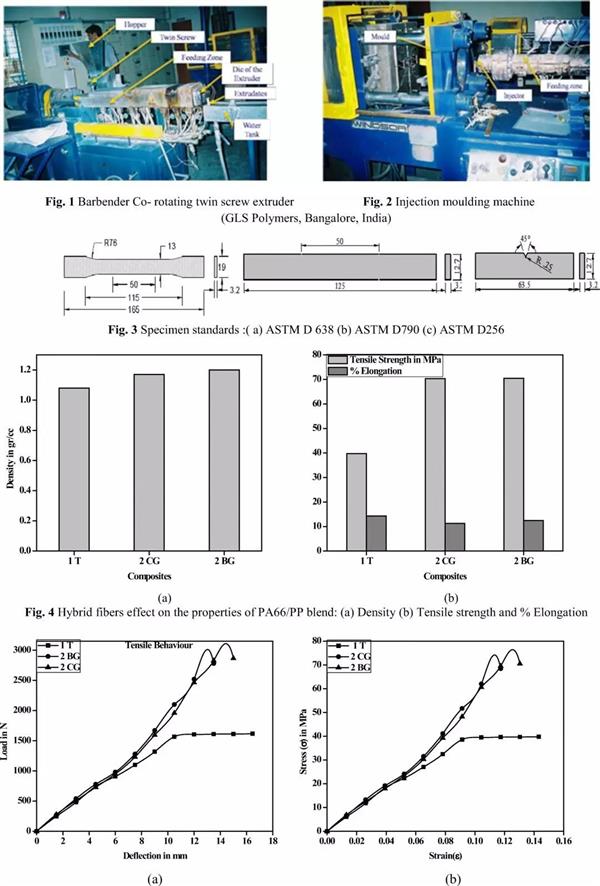
Hybridization effect of fibers on mechanical properties of PA66/PP blend-based thermoplastic composites
B. V. Lingesh*, B. N. Ravi Kumar, B. M. Rudresh, H. N. Reddappa
Advanced Composites and Hybrid Materials, 2018, 1: 766-776
DOI: 10.1007/s42114-018-0049-y
Abstract: The effect of hybrid fibers on mechanical behavior of thermoplastic composites is most important for structural applications. This article deals with the effect of hybrid short fibers i.e., short glass fiber (SGF), short carbon fiber (SCF), and short basalt fibers (SBF) on 80/20 wt% of polyamide 66/polypropylene (PA66/PP) blend. The glass-carbon hybrid composites (CG) and glass-basalt hybrid composites (BG) were prepared by using melt mix twin screw extruder. The mechanical properties such as tensile, flexure, and impact strength of hybrid composites were studied as per ASTM methods. Further, hardness and density of hybrid composites were also discussed. The experimental results revealed that hybrid fibers effect greatly enhanced mechanical behavior of PA66/PP blend. The CG composites exhibited improvement in tensile strength by 76.7%, flexural strength by 104.12 and 20.82% reduction in elongation whereas BG composites by 77.22, 109, and 12.92% reduction in elongation, respectively. Significant enhancement in strength of composites was observed due to hybrid fibers effect. The synergistic effect between hybrid fibers and matrix helped in improving mechanical behavior. The impact strength of hybrid composites was reduced due to brittle nature of fibers. Fiber fracture, fiber pull out and fiber misalignment are some of the mechanisms observed through scanning electron microscopy (SEM) photographs.
Effect of variable conditions on the adsorption selectivity of molecularly imprinted polymers
Ke Li, Zhenbin Chen*, Dong Lei Liu, Xin Yu Zhang, Juan M. Ruso, Zhenghua Tang, Zhen Liu*
Advanced Composites and Hybrid Materials, 2018, 1: 777-784
DOI: 10.1007/s42114-018-0064-z
Abstract: This work mainly studied the separation performance of quercetin molecularly imprinted polymer (Qu-MIP) on quercetin (Qu) in the presence of other flavonoids which possessed similar structures partially at least under different variable conditions. Results documented that Qu-MIP exhibited a special selectivity to Qu in all conditions, and the special selectivity would be enlarged obviously when the total concentration and temperature increased. Besides, quantitative analysis of the degree of separation (D) and concentration (C) (or temperature (T)) displayed a well linear relationship between lnD and C (or T), and the intercept of line, which we defined as the Napierian logarithm of eigen separation degree, increased with the increase of molecular size, which meant MIP could separation target compounds from complex solution system well if impurities with similar contracture but larger molecular size; D increased with the increase of concentration and temperature, but the slope showed an inverse variation trend with the size of Xn. Slope almost showed an increase trend with the increase of Xn molecule size. With the elevation of temperature, slope presented a decline trend with the increase of Xn molecule size. Based on the basic principal of physical and chemical, related reasons were analyzed in detail.

Naked eye colorimetric multifunctional sensing of nitrobenzene, Cr(VI) and Fe(III) with a new green emission Ag6S6 multi-metal-cluster
Rui-Sha Zhou*, Zhi-Zhu Lin, Li-Dong Xin, Jiang-Feng Song*, Hu Liu, Zhanhu Guo*
Advanced Composites and Hybrid Materials, 2018, 1: 785-796
DOI: 10.1007/s42114-018-0061-2
Abstract: With the increasing need of detecting chemical pollutants, modern analytical instruments show many advantages but also have some common drawbacks such as high operational cost and tedious pretreatment procedures. Thus, developing a fast, simple, and convenient colorimetric sensing system is a challenge. Here, a new Ag6S6 cluster-based coordination compound formulated as Ag6(dmpymt)6 (1) (Hdmpymt = 4,6-dimethylpyrimidine-2-thione) was synthesized under solvothermal condition and displayed apparently green luminescence emission and good stabilities in water and some organic solvents. Fluorescence experiments illustrated that 1 displayed efficiently naked eye colorimetric sensing for nitrobenzene (NB), Cr(VI), and Fe(III) ions by fluorescence quenching in the emulsions. The possible sensing mechanisms are attributed to the competitive absorption of excitation wavelength energy between the analytes and the compound 1. Furthermore, the fluorescent test papers of 1 were prepared as well and showed efficient, convenient, and easily recycled characteristics, presenting a potential sensing application for the environmental concerns.

Amplitude-activated mechanical wave manipulation devices using nonlinear metamaterials
James M. Manimala*, Prateek P. Kulkarni, Karthik Madhamshetty
Advanced Composites and Hybrid Materials, 2018, 1: 797-808
DOI: 10.1007/s42114-018-0068-8
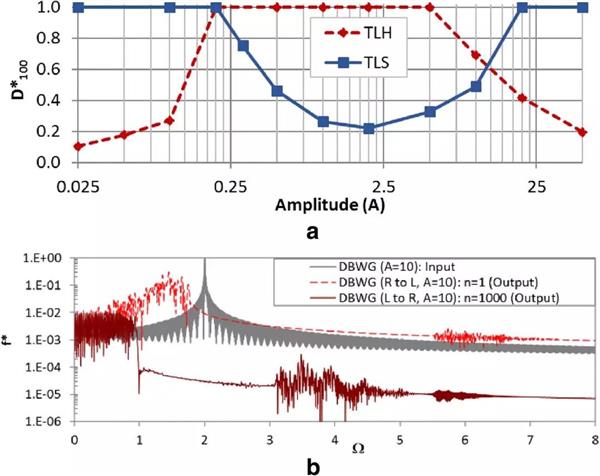
Abstract: We report device implications for acoustic metamaterials with various nonlinear oscillator microstructures as passive amplitude-activated mechanical wave filters and waveguides using simulations on their representative one-dimensional discrete element models. Linear and various nonlinear hardening and softening stiffness cases and combinations thereof are considered for the local oscillators. The propagation and attenuation characteristics of harmonic waves in a tunable frequency range are found to correspond to the excitation amplitude and nonlinearity-dependent shifts in the local resonance bandgap for such nonlinear acoustic metamaterials. Three passive acoustic devices—(i) amplitude-activated selective filter, (ii) amplitude band pass or band rejection filter, and (iii) direction-biased waveguide—are demonstrated numerically. Constituent frequency components in bifrequency excitations are shown to be retained or diminished to varying degrees within acoustic metamaterials with either hardening or softening local oscillators depending on their individual amplitudes. Using trilinear hardening or softening oscillators instead switches the response between attenuation and propagation respectively, outside of a tunable bandwidth of amplitude for the same excitation frequency. Whereas, amplitude-dependent, passive direction-bias in propagation characteristics for a given excitation frequency is demonstrated in a metamaterial waveguide composed of units with tuned combinations of linear and nonlinear hardening oscillators deployed in sequence. These predictions indicate the possibility of realizing acoustic metamaterials having passive adaptive, amplitude-activated dynamics using tailored combinations of nonlinear oscillators to elicit prescribed wave transformations across them.
Study of the hydrogenation and re-heating of Co-doped ZnO and In2O3 Nano composites
Rana Mukherji*, Vishal Mathur, Arvind Samariya, Manishita Mukherji
Advanced Composites and Hybrid Materials, 2018, 1: 809-818
DOI: 10.1007/s42114-018-0052-3
Abstract: Nanocomposite samples of zinc oxide (ZnO) and indium oxide (In2O3) doped with Co (at 1.5% molar concentration) are synthesized through conventional solid-state reaction technique. These samples are taken in a quartz tube and placed in reduction furnace for post-annealing in the presence of hydrogen for ~ 10 h at around 550 °C. The X-ray diffraction (XRD) study confirms the formation of hexagonal wurtzite structure for ZnO, Zn0.985CO0.015O and Zn0.985CO0.015O:H samples whereas cubic bixbyite structure for In2O3, (In0.985CO0.015)2O3 and (In0.985CO0.015)2O3:H samples. The magnetization data investigations depict that both undoped ZnO and In2O3 have small negative susceptibilities and exhibit diamagnetic behavior at room temperature. The doping of Co ions induces paramagnetic property in both the samples. Interestingly, the hydrogenated samples Zn0.985CO0.015O:H and (In0.985CO0.015)2O3:H exhibited a perceptible ferromagnetic behavior at 300 K whereas it overturns significantly after long air sintering. An effort has been made to fit the experiential M-H data of hydrogenated samples to the Bound Magnetic Polaron (BMP) model. MATLAB-based simulations have been performed to validate the homogeneity in particle distribution of the samples evinced through SEM micrographs. A multivariate assessment viz. hierarchical cluster analysis is also executed to corroborate and strengthen the experimental findings of magnetic properties.

Wear behaviour of Al 7075/SiC/Mg metal matrix nano composite by liquid state process
S. Suresh*, G. Harinath Gowd, M. L. S. Deva Kumar
Advanced Composites and Hybrid Materials, 2018, 1: 819-825
DOI: 10.1007/s42114-018-0054-1
Abstract: AA7075 base composites, reinforced using nano silicon carbide, contain average particle size 50 nm that is manufactured via stir casting technique, and also their rate of wear and friction coefficient was examined. During the present investigation, applied load and the weight percentage of nano silicon carbide (SiC) varying from 1, 2, 3 and 4% have been studied. The dry sliding wear characteristics of nanocomposites were analysed through pin-on-disk apparatus. By considering sliding speeds of 3and 4 m/s on applied loads of 20, 30 and 40 N. The outcomes reveal that the ceramic reinforcement of the matrix metal with nano-SiC particles up to weight percentage of 4 decreases the rate of wear. The results indicate that by increasing applied load and sliding distance the wear of the test samples raises linearly. The weight loss and friction coefficient relatively reduce with enhancing weight percentage of nano reinforcements. The wear out surfaces are analysed by scanning electron microscope (SEM) which shows that the small grooved zones and minor cracks are identified on the worn out surface of the composite. It signifies abrasive wear behaviour, which is generally of hard SiC particles subjected on the worn surfaces. Moreover, it was noticed from the test results that the wear rate reduces gradually with improving weight percentage of nano-SiC and friction coefficient decreases linearly with increasing load on the specimens, and weight percentage of SiC. The most efficient result attained at 4% weight percentage.